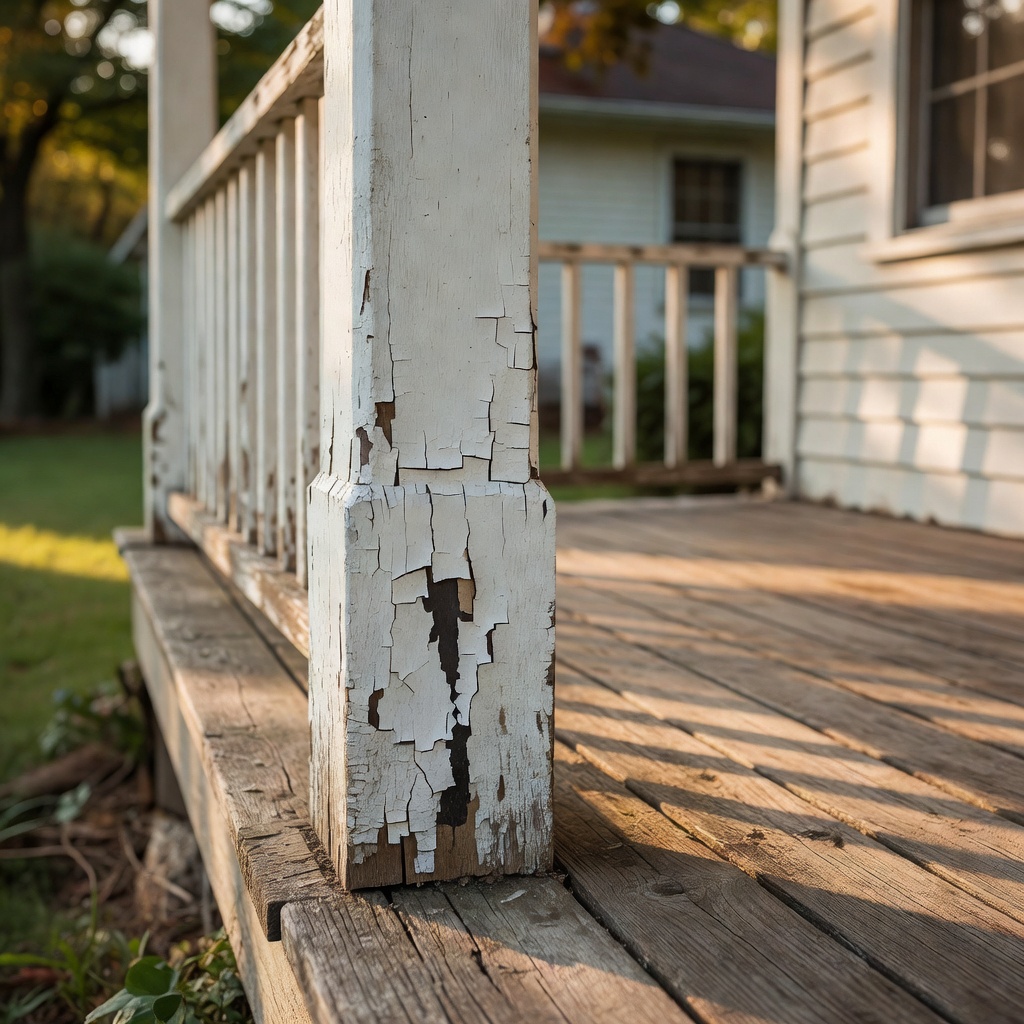
That soft, dark patch at the base of your porch post isn't just cosmetic damage — it's a warning sign. Here's exactly why wood rot starts at the bottom of porch posts, what speeds it up, and what you should do before the damage gets worse.
You noticed it during a spring walkthrough, or maybe a neighbor pointed it out. The bottom of your porch post looks dark. The paint is bubbling. When you press on it, the wood feels soft — maybe even crumbles a little. That's wood rot, and it almost always starts at the base.
This is one of the most common structural problems we see on homes throughout Stafford, Fredericksburg, Spotsylvania, and Prince William counties. The good news? If you catch it early, it's very fixable. The bad news? If you ignore it, the repair gets significantly more expensive — and potentially dangerous.
Let's break down exactly why this happens and what it means for your home.
Why the Bottom of the Post Rots First
Wood rot isn't random. It follows moisture — and moisture always flows downward. The base of a porch post sits at the lowest point of the column, which means it's the first place water collects, lingers, and soaks in.
Here are the main reasons rot almost always starts at the bottom:
1. Ground-Level Moisture Exposure
Whether your post sits on a concrete porch floor, a wooden deck, or directly near soil, the base is constantly exposed to moisture wicking up from below. Concrete and wood both trap humidity at the surface. Over time, that trapped moisture is absorbed into the end grain of the post — the most porous part of any piece of lumber.

2. Poor Drainage Around the Post Base
When it rains, water should run away from the post — not pool around it. Clogged gutters that overflow directly onto the porch, sloped concrete that directs water toward the post, or decorative trim that traps debris and moisture against the wood all create a slow, steady rot environment.
In our climate in Northern Virginia, we deal with hot, humid summers and wet springs. That combination is especially harsh on wood that doesn't have proper drainage around it.
3. Paint Failures Let Moisture In
Paint acts as a protective barrier — but only when it's intact. As paint ages, it cracks, peels, and pulls away from the wood, especially at the bottom where temperature changes and moisture exposure are most extreme. Once those cracks open up, water gets behind the paint and soaks directly into the wood grain. The trapped moisture can't escape, and rot accelerates quickly.
4. End Grain Absorption
The very bottom of a post — where the wood was cut — is called end grain. End grain absorbs moisture up to 15 times faster than the face of the wood. Even if the rest of the post is perfectly sealed and painted, if the end grain at the base isn't properly protected, water will find its way in.
How to Tell If Your Post Is Actually Rotting
Not all discoloration is rot, and not all rot looks the same. Here's the simple homeowner test:
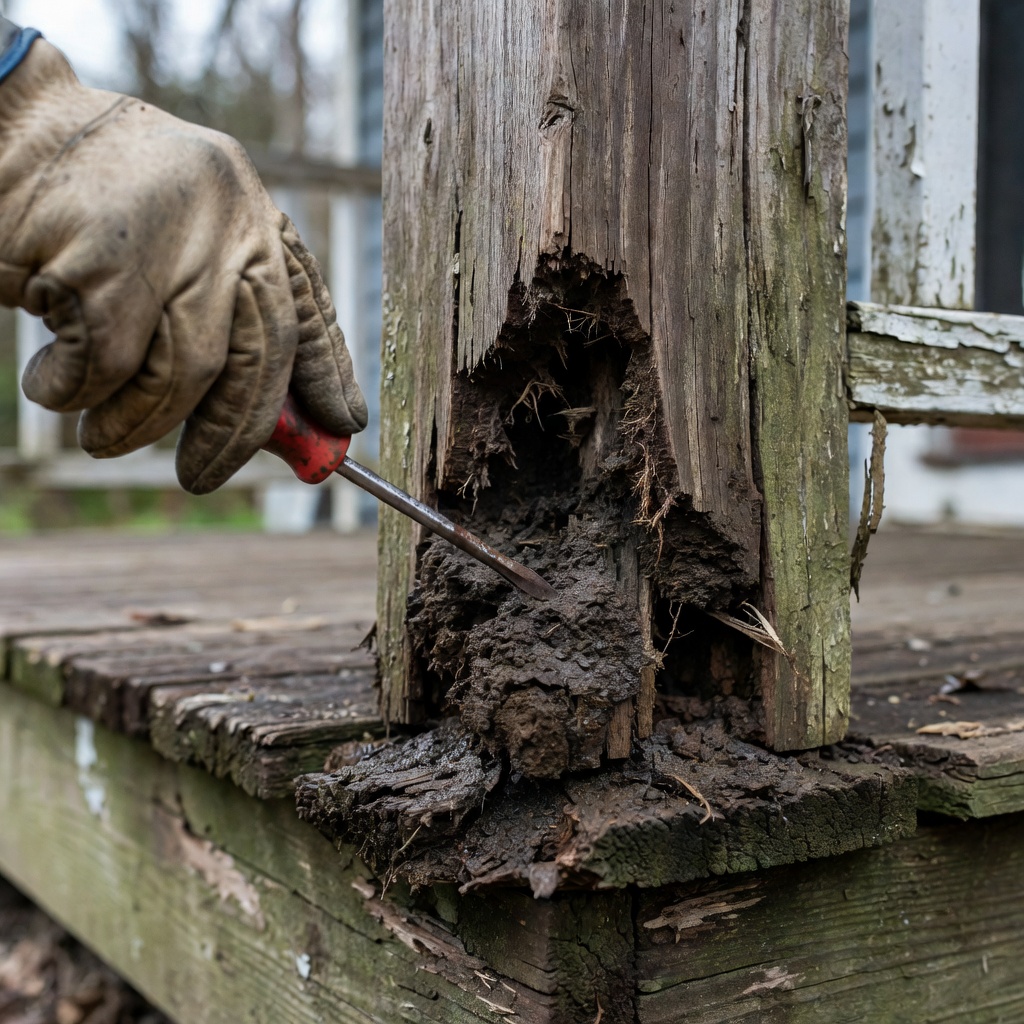
- Press the wood firmly with your thumb or a screwdriver. Healthy wood is hard and springy. Rotted wood is soft, spongy, or crumbles under pressure.
- Look for dark staining at the grain. Rot causes wood fibers to darken and separate along the grain lines.
- Check for paint bubbling or lifting. Moisture trapped beneath paint causes it to bubble and peel — a sure sign something is wrong underneath.
- Smell it. Seriously. Wet rot has a distinct musty or earthy odor that healthy wood doesn't.
How Deep Does the Rot Go?
This is the critical question — and it determines whether you need a patch repair or a full post replacement.
Surface rot (less than ½ inch deep) can sometimes be treated with epoxy wood filler and sealed properly. But rot that has penetrated deeper into the post — or that has reached the structural core — requires full replacement. A post that looks mostly intact on the outside can still be severely compromised on the inside.
This is why a professional assessment matters. What looks like a minor cosmetic issue at the surface is often a much bigger problem once you start digging in.
What Happens If You Leave It?
Porch posts aren't just decorative. They're structural. They carry the load of your porch roof or overhang and transfer that weight down to the foundation. A post that's rotted at the base is no longer doing its job properly.
As the rot progresses, you may notice:
- The post starting to lean or shift
- Cracking or separation in the trim or fascia above the post
- The porch roof beginning to sag or pull away from the house
- Visible gaps opening up between the post and the porch floor
At that stage, you're no longer dealing with a wood repair — you're dealing with a structural repair that can run several times the cost of catching it early.
What's the Fix?
The right fix depends on how far the rot has spread:
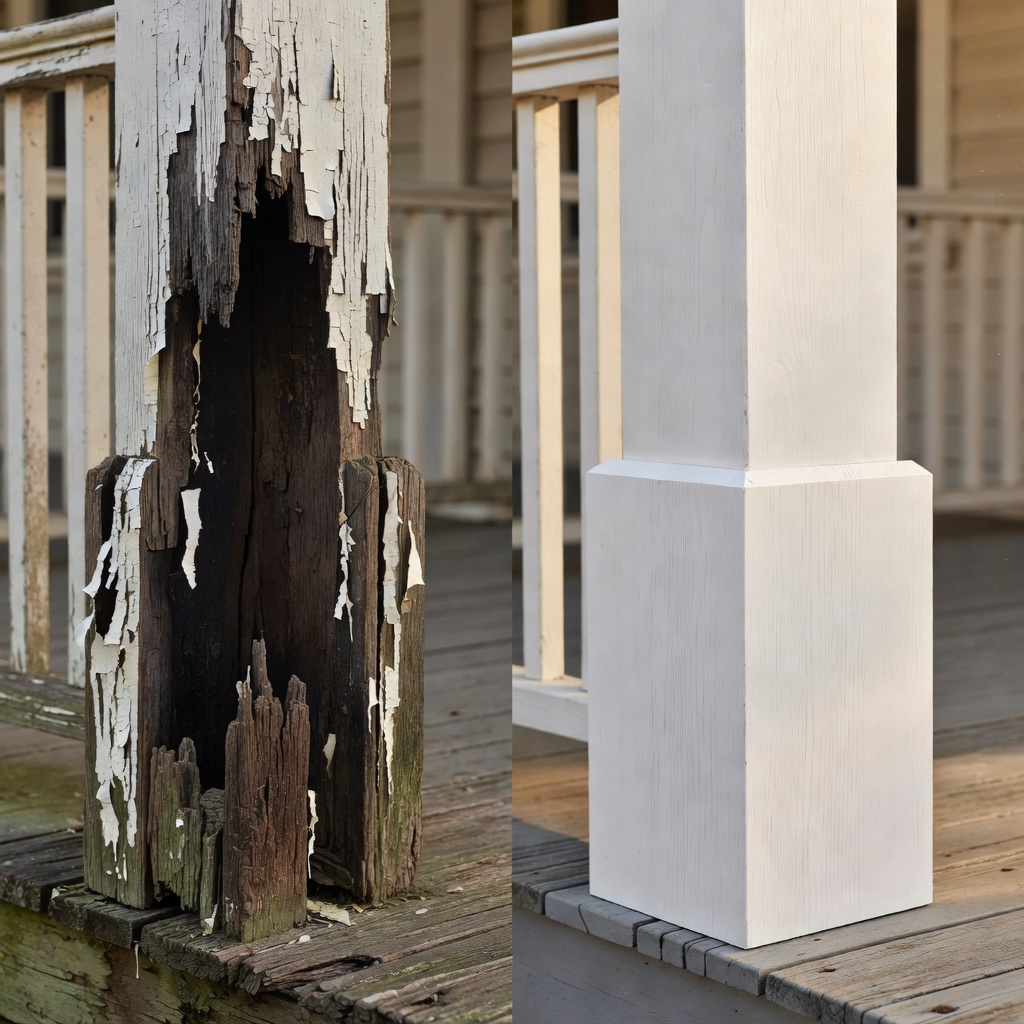
- Early-stage rot: The damaged section is removed, the area is dried and treated, and an epoxy consolidant and filler are used to rebuild the wood's integrity. Properly done, this can last many years.
- Mid-to-advanced rot: A partial post replacement may be possible if the rot hasn't reached the top bearing point. The rotted section is cut away and a new treated-wood or composite section is spliced and secured.
- Severe rot: Full post replacement is required. The old post is carefully removed, the load is temporarily supported, and a new post — typically pressure-treated wood or a composite column — is installed with proper base flashing to prevent future moisture intrusion.
In every case, addressing the root cause of the moisture is just as important as the repair itself. Otherwise, the new post will eventually face the same problem.
Bottom Line for Northern Virginia Homeowners
If you're seeing soft, dark wood at the base of your porch post, don't wait. The damage doesn't get smaller — it gets deeper, more expensive, and eventually dangerous. The sooner a professional takes a look, the better your options are.
We serve homeowners across Stafford County, Fredericksburg, Spotsylvania County, and Prince William County. If you're not sure how serious the damage is, we're happy to take a look and give you a straight, honest assessment — no pressure, no runaround.

Written by the PorchFix Team
Dedicated to keeping Northern Virginia homes looking their best with professional repair and quality craftsmanship.
Worried about your porch?
Get a professional repair review and fixed-price quote from Northern Virginia's porch repair specialists.